
Everything You Need to Know About This Revolutionary Business Model
Have you ever dreamed of running your own online store but were put off by the huge investments in inventory, storage space, and logistics? Then dropshipping might be the solution you’ve been looking for. This innovative business model has helped thousands of entrepreneurs turn their dream of owning an online business into reality—without the traditional barriers of retail.
But what exactly is dropshipping? How does it work? And more importantly is it right for you? In this comprehensive guide, we dive deep into the world of dropshipping and give you all the information you need to make an informed decision.
Dropshipping Explained Simply
Imagine having a store window but no warehouse. You showcase beautiful products to customers, they place an order with you, but you forward that order to someone else who ships the product directly to the customer. That’s dropshipping in a nutshell.
In the traditional retail model, you buy products in bulk, store them in a warehouse, and ship them yourself. With dropshipping, you act as a middleman between customers and suppliers. You sell products through your own webshop, but the supplier handles the storage, packaging, and shipping.
This means you can run a fully functional online store from your bedroom without ever touching a product. When a customer places an order in your webshop, you automatically forward it to your supplier, who then ships the product directly to the customer—often in your branded packaging.
How Dropshipping Works in Practice
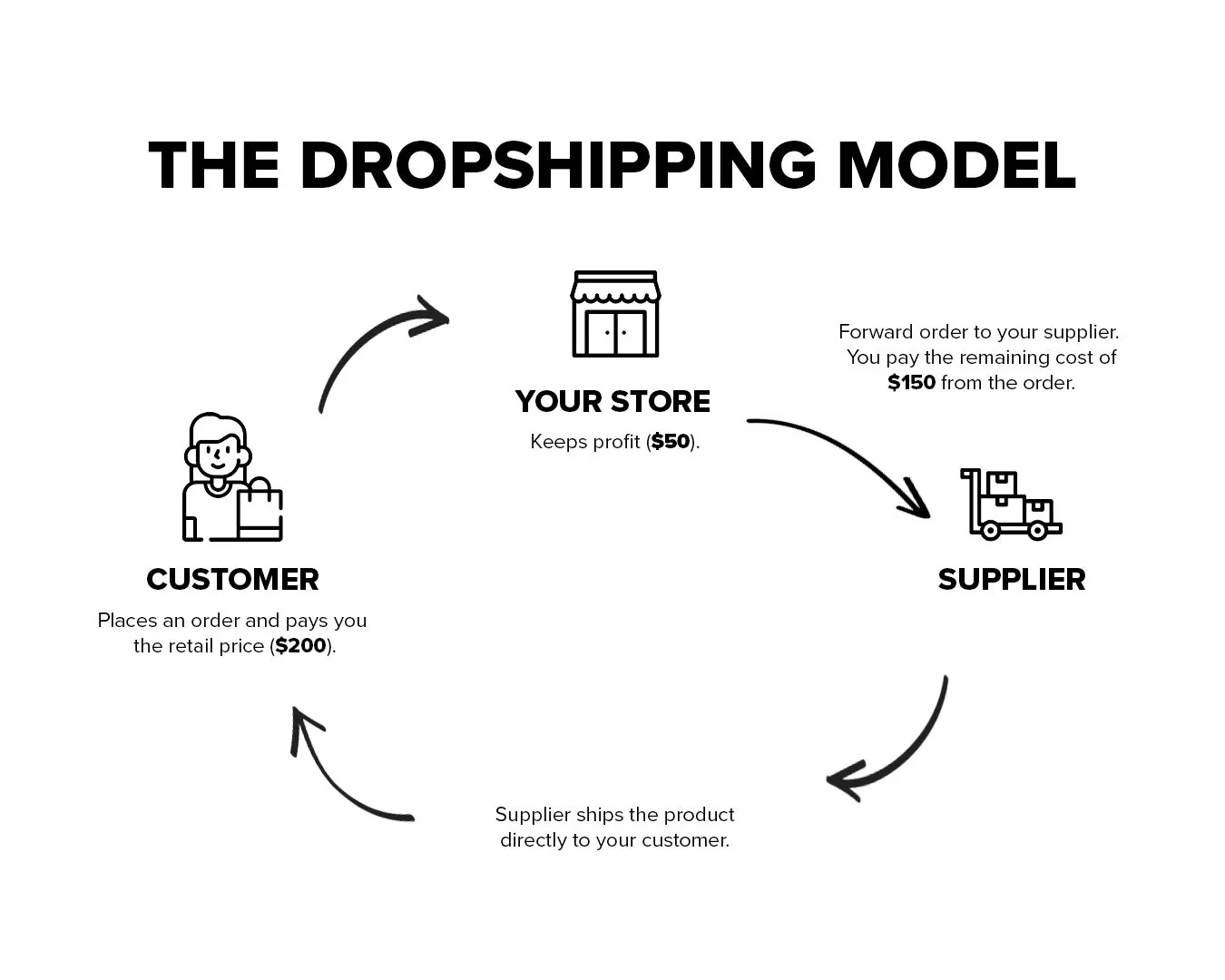
The beauty of dropshipping lies in its simplicity. Let’s walk through a typical dropshipping transaction step by step:
Step 1: Customer discovers your product
A potential customer finds your webshop through Google, social media, or an ad. They browse your catalog and find something they like—maybe a trendy smartphone case, an innovative kitchen gadget, or a unique piece of home décor.
Step 2: The order is placed
The customer decides to purchase and pays the retail price—for example, €29.95 for the smartphone case. The money goes to your account, and they receive a confirmation email from your store.
Step 3: You forward the order
Once you receive the order, you forward it to your supplier. The supplier has the item in stock and handles the shipping. You pay the wholesale price—say €12.50 for that same smartphone case.
Step 4: Supplier ships the product
The supplier packages the product (ideally in your branded packaging) and ships it directly to your customer. The customer receives the product without ever knowing it wasn’t shipped by you.
Step 5: You keep the margin
The difference between what the customer paid (€29.95) and what you paid the supplier (€12.50) is your profit—€17.45 gross profit in this example.
The Different Forms of Dropshipping
Dropshipping isn’t a one-size-fits-all model. There are several variations, each with its own pros and cons:
Traditional Dropshipping
The model described above. You run a webshop, customers order from you, and suppliers ship directly to them. It’s the most common and easiest to start with.
Print-on-Demand
A specialized version where products are only manufactured after they’re ordered. Think custom-designed shirts, personalized mugs, or custom phone cases. Ideal for creatives who want to sell their designs without stocking inventory.
White Label Dropshipping
You sell existing products under your own brand name. The supplier manufactures the product, but the branding is entirely yours. This gives you more control over customer experience and brand perception.
Hybrid Model
Experienced dropshippers often combine models. They may stock their bestsellers for fast shipping while offering new or seasonal items via dropshipping. This blends flexibility with control.
Why Do Entrepreneurs Choose Dropshipping?
Dropshipping has surged in popularity for good reason—it offers advantages that traditional retail cannot match:
Low Startup Costs
Traditional stores require tens of thousands of euros for inventory and storage. You can start a dropshipping business with just a few hundred euros.
Location Independence
With a laptop and an internet connection, you can run your business anywhere—Amsterdam, Thailand, Spain—it doesn’t matter.
No Inventory Management
Suppliers handle inventory. You focus on marketing, customer service, and growth.
Easy to Scale
Want to add 1000 new products tomorrow? No problem. No warehouse expansion needed.
Product Diversity
Dropshipping lets you offer thousands of products from suppliers worldwide—ideal for exploring new niches.
The Reality: Challenges of Dropshipping
Like any business model, dropshipping has its challenges:
Lower Profit Margins
Because you don’t buy in bulk, your cost per item is higher. Success relies on volume and efficiency.
Less Control Over Quality
You might never physically see the products you sell. If a supplier has poor quality, your customer blames you.
Dependency on Suppliers
Your success depends on your suppliers’ stock levels, shipping, and quality control.
Complex Customer Service
If something goes wrong, customers come to you—even though you didn’t ship the item.
High Competition
Low barriers to entry mean many competitors. You must differentiate through marketing, service, or niche products.
Dropshipping vs. Traditional Retail
A quick comparison:
Startup Costs
- Traditional: €10,000–€100,000+
- Dropshipping: €500–€5,000
Time Investment
- Traditional: inventory, shipping, customer service
- Dropshipping: marketing, customer service, supplier management
Profit Margins
- Traditional: 50–200%
- Dropshipping: 20–100%
Risk
- Traditional: high (unsold inventory)
- Dropshipping: low (no inventory investment)
Scalability
- Traditional: limited by space and capital
- Dropshipping: limited only by demand and supplier capacity
Is Dropshipping Legal and Ethical?
Yes dropshipping itself is completely legal and ethical.
Dutch Legal Framework:
You must register with the Chamber of Commerce (KvK), pay VAT, and comply with consumer laws—such as providing accurate delivery times and return policies.
Ethical Considerations:
Problems arise when dropshippers mislead customers with fake delivery promises or deceptive marketing. Ethical dropshipping is transparent and customer-focused.
Quality Guarantee:
You’re responsible for what you sell—so choose suppliers carefully.
Who Can Be Successful in Dropshipping?
People with these traits have a higher chance of success:
- Digital native – comfortable with tech and digital tools
- Creative marketer – strong at branding and content
- Patient strategist – understands it takes months to build a profitable business
- Service-oriented entrepreneur – values good customer service
- Data-driven thinker – uses analytics to improve performance
Modern Dropshipping: Trends and Developments
Automation & AI
Platforms like Droppery use AI to recommend products, forecast inventory, and segment customers.
Micro-niches
Successful dropshippers focus on ultra-specific categories (eco-friendly cat toys, ergonomic home-office accessories).
Omnichannel Sales
Selling through multiple platforms (Bol.com, social media, pop-up stores).
Sustainability & Local Sourcing
Dutch consumers increasingly prefer sustainable, Europe-sourced products.
Community Building
Top dropshippers build loyal communities via Facebook groups, Discord, and email marketing.
Dropshipping with Droppery: The EU Advantage
Droppery stands out by focusing on the Dutch market and European suppliers:
- Local expertise – tools built for Dutch e-commerce
- Fast shipping – thanks to European suppliers
- Automated workflows – orders, stock sync, pricing, analytics
- Dutch support – fast help during Dutch business hours
The Future of Dropshipping
Expected trends include:
- Higher quality standards
- AI-powered personalization
- More automation
- Stricter regulations on consumer protection and sustainability
Your First Steps in Dropshipping
- Education – learn e-commerce basics
- Niche Research – find a passionate and profitable market
- Platform Selection – Shopify, WooCommerce, or Droppery
- Supplier Vetting – test products before adding them
- Legal Setup – register with the KvK, set up policies
- Launch & Learn – start small, optimize constantly
The Truth About Dropshipping Success
Dropshipping is not a get-rich-quick scheme. It requires work, strategy, and persistence. Overnight successes are rare—most profitable dropshippers spent months or years building their business.
But for those willing to learn, experiment, and commit, dropshipping offers a real path to entrepreneurship. It removes many traditional retail barriers and lets you focus on creating value for customers.
Dropshipping isn’t just a business model it’s a mindset.
Welcome to the future of retail.